Walking Pad vs. Treadmill: Which One Fits Your Routine?
A walking pad and a full treadmill solve different problems, not the same problem at two price points. Here's how the WalkingPad P1, the R3 Hybrid+, and a full treadmill like the NordicTrack Commercial 1750 actually compare.
Key Takeaways
- A basic walking pad (WalkingPad P1) tops out at 3.75 MPH with no incline, built for desk-time movement, not training
- A walk-run hybrid pad (R3 Hybrid+) reaches roughly 7.5 MPH but still has no incline
- A full treadmill adds incline/decline terrain simulation and a trainer-led content library neither walking pad offers
- The tradeoff for a full treadmill is footprint and price
- These solve different use cases; many households add a treadmill later rather than replacing a walking pad with one
This article was authored by iFIT and may contain affiliate links. If you buy a product after clicking a link, iFIT may earn commissions.
If you work from home and want to move more during the day, a walking pad and a full treadmill solve two different problems, not the same problem at two price points. Here's the honest breakdown of what each one is actually built for.
What A Walking Pad Actually Is
A walking pad like the WalkingPad P1 is a slim, low-profile unit built for walking, not running. The P1 specifically:
Speed range of 0.5 to 3.75 MPH (walking pace only, no running)
No incline feature
Running deck measuring 47.24 inches long by 16.5 inches wide
Folds flat for under-bed or under-couch storage
220 lb user weight capacity
Controlled by foot-sensing automatic speed adjustment, a remote, or a companion app, no built-in screen
It's also worth knowing the P1 runs on a brush motor rather than the brushless motors found on some pricier walking pads, the tradeoff that keeps its price at the budget end of the category. There's no incline, and while the companion app includes some guided programs, the fuller trainer-led content library is reserved for full treadmills with iFIT. It's a single-purpose tool for adding walking time to a day that doesn't otherwise have room for it, often under a standing desk.
Looking For More Than Walking Pace?
Not every walking pad stops at a walking pace. The WalkingPad R3 Hybrid+ sits between a pure walking pad and a full treadmill: it adds side handrails and a speed range up to roughly 7.5 MPH, enough to move from a walk into an actual jog, something the P1's 3.75 MPH ceiling doesn't allow. It still has no incline, so it's not a replacement for a full treadmill's terrain simulation, but it's a real option for someone who wants occasional running capability without committing to a full-size machine.
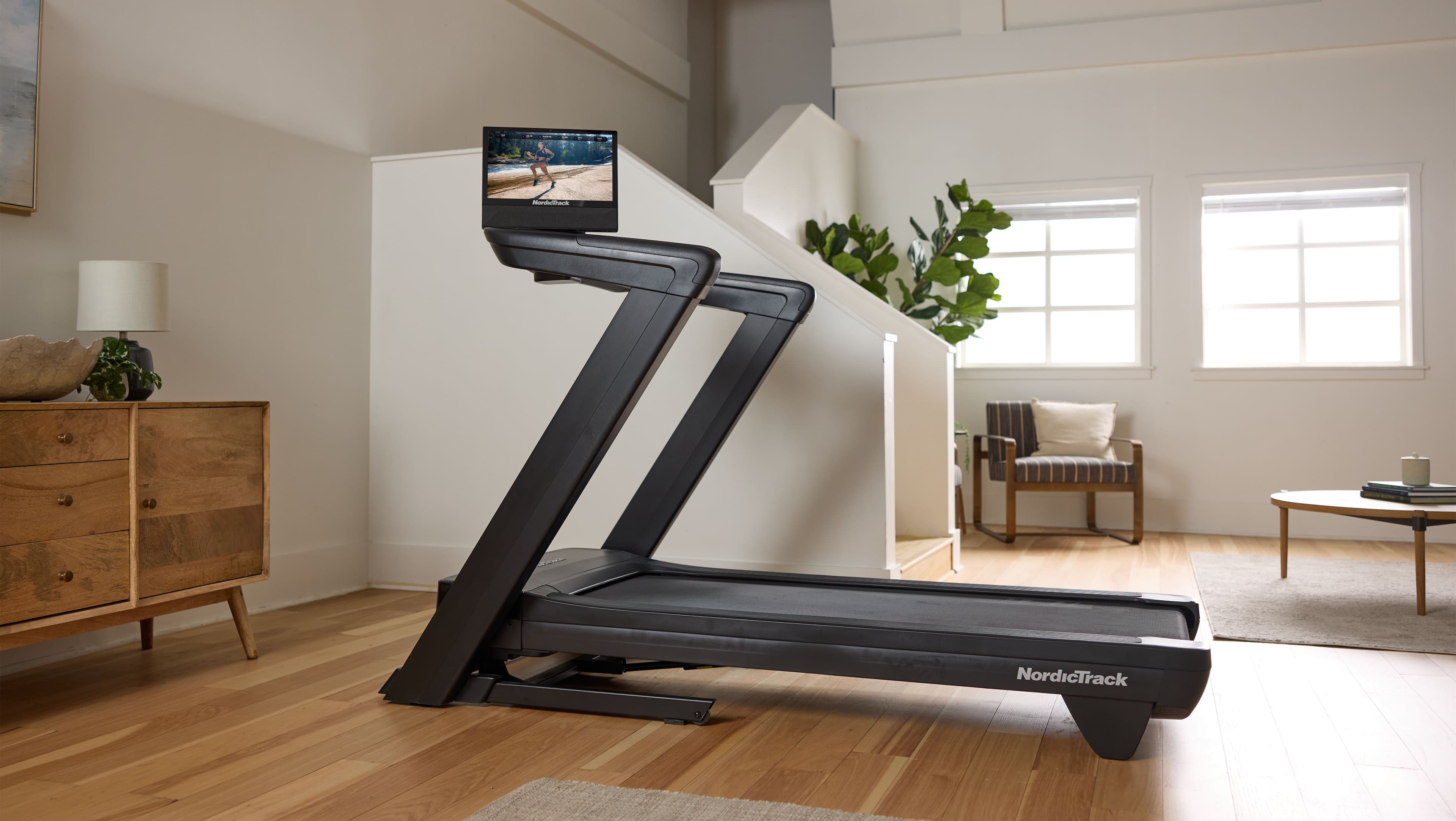
A treadmill like the NordicTrack Commercial 1750 is built for a wider range of training, covering walking, jogging, and running in one machine. The 1750 runs up to 12 MPH with a 12% incline and -3% decline, which adds terrain simulation neither a walking pad nor a walk-run hybrid has a mechanism for. It also carries a full trainer-led content library through a paid iFIT membership, where a walking pad's companion app typically offers step tracking and some guided programs, rather than a full trainer-led content library.
The tradeoff is footprint and price. A full treadmill needs more floor space even when folded, and costs meaningfully more than either walking pad option.
Which One Actually Fits You
A walking pad makes sense if:
You want to add walking time during desk work, calls, or TV, not a dedicated workout session
Floor space is tight, under-bed or under-couch storage matters
You don't need incline, running capability, or trainer-led content
A walk-run hybrid pad makes sense if:
You want the occasional jog without a full treadmill's footprint
Incline still isn't a priority for your training
A full treadmill makes sense if:
You want to run regularly, not just occasionally
You want incline and decline training
You want structured, trainer-led workouts rather than open walking time
They're genuinely not competing for the same use case. A lot of households that start with a walking pad for desk-time movement later add a full treadmill for actual training, rather than replacing one with the other.
Why This Matters Beyond Convenience
Movement spread throughout the day, not just a single workout session, carries its own benefit. The National Institutes of Health has noted that breaking up long periods of sitting with short walking breaks measurably improves metabolic health markers, separate from whatever structured exercise happens elsewhere in the day.
Frequently Asked Questions
It depends on the model. The WalkingPad P1 tops out at 3.75 MPH, safely used as a brisk walk, not a running pace. A walk-run hybrid pad like the R3 Hybrid+ reaches roughly 7.5 MPH, enough for a jog. Sustained running pace still points to a full treadmill.
Neither the WalkingPad P1 nor the R3 Hybrid+ offers incline. Incline training requires a full treadmill like the NordicTrack Commercial 1750.
Yes, substantially, even the higher-end walk-run hybrid pads. A basic walking pad sits at the budget end of its category, though it's also built for a narrower use case than a full treadmill.
Not in the way a full treadmill with a paid iFIT membership does. Most walking pads track steps, distance, and time through a companion app, with some offering guided programs, but without a full trainer-led content library or automatic terrain adjustment.
The primary purpose of this blog post is to inform and entertain. Nothing on the post constitutes or is intended to be a substitute for professional medical advice, prevention, diagnosis, or treatment. Reliance on any information provided on the blog is solely at your own risk. Always seek the advice of your physician or other qualified health provider with any questions you may have regarding a medical condition, and please consult your doctor or other health care provider before making any changes to your diet, sleep methods, daily activity, or fitness routine. Do not disregard professional medical advice or delay seeking it because of information available on this blog. iFIT assumes no responsibility for any personal injury or damage sustained by any recommendations, opinions, or advice given in this article. Always follow the safety precautions included in the owner's manual of your fitness equipment.
The Editorial Desk researches each equipment, checks its specs against the manufacturer's own product page, and says plainly what has been tested hands-on and what has not.